Discover 5 trenchless sewer methods that can help Englewood homeowners reduce excavation, protect landscaping, and potentially save thousands in restoration costs.
A sewer line problem is stressful enough without wondering whether the repair will destroy your driveway, disturb a pool deck, or damage the mature oak you’ve spent years maintaining. For homeowners facing sewer line replacement needs in Englewood, the location of the damaged pipe can have a major impact on the repair process and the restoration required afterward.
Traditional excavation may require digging a long trench to reach the sewer line. When that line passes beneath concrete, landscaping, irrigation, or established trees, the restoration can become a significant part of the project. In the right situation, trenchless sewer technology can reduce excavation and help homeowners avoid some of those additional costs.
That doesn’t mean every sewer line qualifies for trenchless repair. A professional inspection should determine whether lining, pipe bursting, localized repair, or traditional excavation is the appropriate solution for your property.
Why Sewer Lines Fail in Older Homes
Sewer problems often develop gradually. A homeowner may notice a slow drain or occasional toilet backup long before the underlying pipe becomes a serious problem.
Depending on the age and history of the property, residential sewer lines may contain clay, cast iron, or other materials that can deteriorate over time.
Common causes of sewer line problems include:
- Root intrusion: Roots can enter through cracks, openings, or separated joints while seeking moisture.
- Pipe corrosion: Older cast-iron lines can develop corrosion, scaling, and reduced flow capacity.
- Cracks and fractures: Aging, ground movement, and stress can damage underground pipe sections.
- Separated joints: Shifting pipe connections can allow roots, soil, and water to enter the line.
- Collapsed pipe: Severe deterioration can restrict or completely stop wastewater flow.
- Bellied or sagging pipe: Settled sections can collect wastewater and debris, causing recurring blockages.
The age of the sewer line is only part of the equation. What matters most is the condition of the pipe, the type of damage, and where the line is located.
That’s why a sewer camera inspection is an important first step before deciding how to repair or replace the line.
Why Trenchless Sewer Repair Can Matter Under a Driveway or Pool
Traditional sewer replacement typically requires excavation along much of the damaged pipe.
That becomes more complicated when the line runs beneath:
- Driveways
- Pool decks
- Patios
- Walkways
- Fences
- Irrigation systems
- Established landscaping
- Mature trees
Digging may solve the pipe problem, but it can also create a second project: restoring everything that had to be removed to reach the sewer.
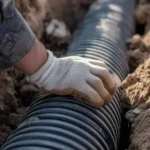
Trenchless methods are designed to reduce the amount of surface excavation required. Depending on the technique and condition of the existing pipe, technicians may be able to work through limited access points instead of opening the entire sewer route.
However, trenchless does not mean completely excavation-free in every case. Access pits or other limited excavation may still be necessary.
The objective is to use the least disruptive repair method that is technically appropriate for the sewer line.
5 Trenchless Sewer Methods That Can Save Time, Disruption, and Restoration Costs
1. Cured-In-Place Pipe (CIPP) Lining
Cured-in-place pipe lining, commonly called CIPP, rehabilitates an existing sewer pipe from the inside.
A flexible liner saturated with resin is inserted into the existing pipe and expanded against its interior walls. The resin is then cured, creating a new pipe within the old one.
When CIPP May Be Appropriate
CIPP may be considered for:
- Cracked sewer pipes
- Certain root intrusion problems
- Some separated joints
- Pipes that remain structurally suitable for rehabilitation
The existing line must be inspected and prepared before installation. Severe collapse, unsuitable geometry, heavy obstruction, or other conditions can make CIPP inappropriate.
Why It Can Help Homeowners
If the sewer runs beneath a driveway, landscaped area, or pool deck, lining may reduce the need for extensive excavation.
That can mean less disruption to the property and potentially less money spent restoring concrete, landscaping, irrigation, or other surfaces.
2. Pipe Bursting
Pipe bursting replaces the existing sewer pipe rather than simply lining it.
A bursting head breaks apart the old pipe while specialized equipment pulls a new pipe into the existing underground path. HDPE, or high-density polyethylene, is commonly used for this type of replacement.
When Pipe Bursting May Be Considered
It can be an option when:
- The existing pipe is severely damaged
- Full pipe replacement is necessary
- The existing route is suitable
- Appropriate access points can be established
Unlike CIPP, pipe bursting installs a new pipe rather than creating a liner inside the old one.
Why It Can Reduce Property Damage
For a sewer route beneath hardscape or established landscaping, replacing the line through limited access points can reduce the amount of surface that needs to be opened compared with a full-length trench.
That can reduce restoration work after the sewer replacement is completed.
3. Minimally Invasive Localized Sewer Repair
Not every sewer problem requires replacing the entire line.
A camera inspection may reveal a single damaged section, such as:
- An isolated crack
- A separated joint
- A localized collapse
- A specific area of root intrusion
When the rest of the sewer line is in good condition, repairing the affected section may make more sense than replacing the entire line.
A localized repair may still require a small excavation to reach the damaged section, so it isn’t completely trenchless in every situation. The benefit is that the work can be limited to the actual problem area.
4. Slip Lining
Slip lining involves installing a smaller pipe inside the existing sewer line to create a new flow path.
Because the replacement pipe sits inside the original pipe, the usable internal diameter becomes smaller. That reduction must be considered before selecting this method.
Slip Lining May Be Considered When:
- The existing route is suitable
- The pipe can accommodate the replacement
- A reduced internal diameter is acceptable
- Access conditions allow installation
A professional sewer inspection is necessary to determine whether slip lining makes sense for a particular property.
5. Internal Pipe Coating
Some sewer rehabilitation projects use specialized internal coatings to seal and rehabilitate the inside of an existing pipe.
This is different from CIPP because a coating is applied to the pipe interior rather than installing a structural liner.
Internal coating may be appropriate for certain pipe conditions, but it is not a universal solution for severely damaged or collapsed sewer lines.
The existing pipe must be evaluated first to determine whether this approach is technically suitable.
How Trenchless Methods Can Save Englewood Homeowners $5,000+
The biggest potential savings from trenchless sewer work may not come from the pipe repair itself.
They can come from avoiding extensive restoration.
Imagine a sewer line running underneath a concrete driveway. Traditional excavation could require removing sections of concrete, excavating the pipe, completing the repair, backfilling, and then rebuilding the affected surface.
The same issue beneath an established landscape could involve:
- Removing plants
- Disturbing irrigation
- Excavating around tree roots
- Regrading soil
- Replacing landscaping
A trenchless method may reduce some of those restoration requirements.
That’s why a project can potentially save $5,000 or more when extensive concrete, landscaping, hardscape, or other restoration would otherwise be required. However, savings vary considerably by property and repair method.
Factors That Affect the Total Cost
The overall project can depend on:
- Sewer line length
- Pipe diameter
- Pipe material
- Depth of the line
- Severity of damage
- Accessibility
- Number of access points
- Selected repair method
- Concrete or asphalt restoration
- Landscaping restoration
- Local requirements
Trenchless technology is therefore not automatically cheaper for every homeowner. The potential savings are greatest when avoiding substantial excavation and restoration.
When Is a Sewer Problem an Emergency?
Some sewer problems require prompt attention because wastewater can damage your home and create unsanitary conditions.
Contact a plumbing professional promptly if you notice:
- Multiple drains backing up simultaneously
- Sewage entering a floor drain
- Repeated toilet backups
- Strong sewage odors
- Gurgling toilets or drains
- Unexplained wet areas in the yard
- Several fixtures draining slowly
- Wastewater backing up into the home
If you’re searching for Emergency Plumbing near me, focus on finding Licensed Plumbers who can identify the source of the problem rather than simply clearing the immediate blockage.
If sewage is entering the home, minimize water use until the problem can be evaluated.
What Happens During a Plumbing Inspection?
A professional plumbing inspection can help determine whether a drainage problem is limited to one fixture or involves the main sewer line.
For suspected sewer problems, an inspection may include:
Camera Inspection
A specialized camera provides a view inside the sewer line and can reveal roots, cracks, corrosion, buildup, separated joints, and collapsed sections.
Sewer Line Locating
Electronic locating equipment can help determine the approximate path of the underground sewer line.
This is particularly useful when the pipe runs beneath a driveway, pool area, landscaping, or other hard-to-access location.
Flow Evaluation
The technician can evaluate drainage and identify restrictions that may be affecting wastewater flow.
Repair Assessment
The inspection findings help determine whether CIPP lining, pipe bursting, localized repair, traditional excavation, or another solution is appropriate.
This step is important because not every damaged sewer line should be treated with the same repair method.
When Should You Consider Sewer Line Repair?
A recurring plumbing problem should not simply be treated as an isolated drain blockage if the symptoms keep returning.
If multiple fixtures are slow, toilets repeatedly back up, or sewage odors appear around the property, the main sewer line may need attention.
If you’re searching for sewer line repair near me, choose a company that can inspect the line and explain the difference between repair, rehabilitation, and replacement.
A proper diagnosis can help prevent unnecessary work and give you a clearer understanding of your options.
Why Local Plumbing Experience Matters
Every property has its own sewer layout, pipe material, depth, access limitations, and repair history.
For homeowners searching for plumbers near me, the closest company isn’t necessarily the best choice. Look for a provider that can explain:
- What caused the sewer problem
- Where the damaged section is located
- Whether trenchless repair is suitable
- What alternatives are available
- What restoration may be necessary
- What the estimate includes
Local knowledge can also help professionals account for property-specific conditions and applicable requirements.
Plumbing Services for Homeowners in the Area
Sewer problems can involve more than one plumbing service. Depending on the diagnosis, a homeowner may need drain cleaning, sewer repair, pipe replacement, leak detection, or other residential plumbing services.
A Clear Choice Plumbing & Heating provides plumbing services in Englewood with an emphasis on diagnosing the underlying problem before recommending a solution.
Homeowners can expect:
- Licensed Plumbers: Qualified professionals who can evaluate residential plumbing and sewer problems.
- No Hidden Costs: Clear communication about the recommended work and expected charges.
- Years of Experience: Practical experience with different residential plumbing and sewer conditions.
- Free Estimates Available: An opportunity to understand the proposed work before moving forward.
Whether you need plumbing in Englewood because of recurring drainage problems or you’re researching sewer line replacement in Englewood, understanding the condition of the underground pipe should come first.
When Trenchless Sewer Repair May Not Be the Right Choice
Trenchless technology can be extremely useful, but it isn’t appropriate for every sewer problem.
Traditional excavation or another repair method may be necessary when:
- The pipe has severe structural collapse
- The existing line is unsuitable for lining
- The sewer has significant grade or alignment problems
- Access requirements cannot be met
- The pipe condition prevents successful trenchless installation
- A particular connection requires direct excavation
- Local requirements call for a different repair approach
A reputable plumber should explain why a specific method is recommended rather than automatically selling trenchless technology.
The goal isn’t simply to avoid digging. The goal is to restore reliable wastewater flow using a repair method that fits the condition of the property.
Frequently Asked Questions
What are the signs I need sewer line repair near me?
Recurring backups, multiple slow drains, sewage odors, gurgling fixtures, and unexplained wet areas can indicate a sewer problem. A camera inspection can help confirm the cause.
How do I know if I need sewer line replacement in Englewood?
Replacement may be appropriate when a sewer line has severe damage, repeated failures, or conditions that make rehabilitation unsuitable. An inspection should determine the best approach.
Can trenchless repair work beneath a driveway or pool?
Often, yes. CIPP lining and pipe bursting can reduce full-length excavation, although limited access points may still be required.
Can trenchless sewer repair really save $5,000 or more?
It can in some situations, particularly when traditional excavation would require significant driveway, concrete, landscaping, or hardscape restoration. Actual savings depend on the property and repair method.
When should I call a plumber near me?
Call promptly if multiple fixtures back up, sewage enters the home, or you notice strong sewage odors or unexplained wastewater around the property.
How long does a plumbing inspection take?
The time varies based on the property and inspection required. A sewer camera inspection may be relatively quick, while a broader inspection can take longer.
What should I look for when choosing local plumbers?
Look for Licensed Plumbers, relevant residential experience, clear communication, transparent estimates, and a willingness to explain why a particular repair method is appropriate.
Protect Your Driveway, Landscaping, and Property
A sewer line failure is frustrating on its own. When the damaged pipe runs beneath a driveway, pool deck, patio, or mature landscaping, the potential restoration can make the situation even more complicated.
Trenchless sewer methods can give eligible homeowners another option. Depending on the condition and location of the pipe, CIPP lining, pipe bursting, or another minimally invasive approach may reduce excavation and help limit damage to the surrounding property.
The first step is finding out what is actually happening underground.
If you’re dealing with recurring backups, multiple slow drains, sewage odors, or unexplained wet areas, a professional inspection can identify the problem and help determine whether trenchless repair or traditional replacement is the better choice.
For residential plumbing services in Englewood, contact A Clear Choice Plumbing & Heating at (720) 744-4460 to discuss your sewer problem and explore the appropriate repair options for your home.