
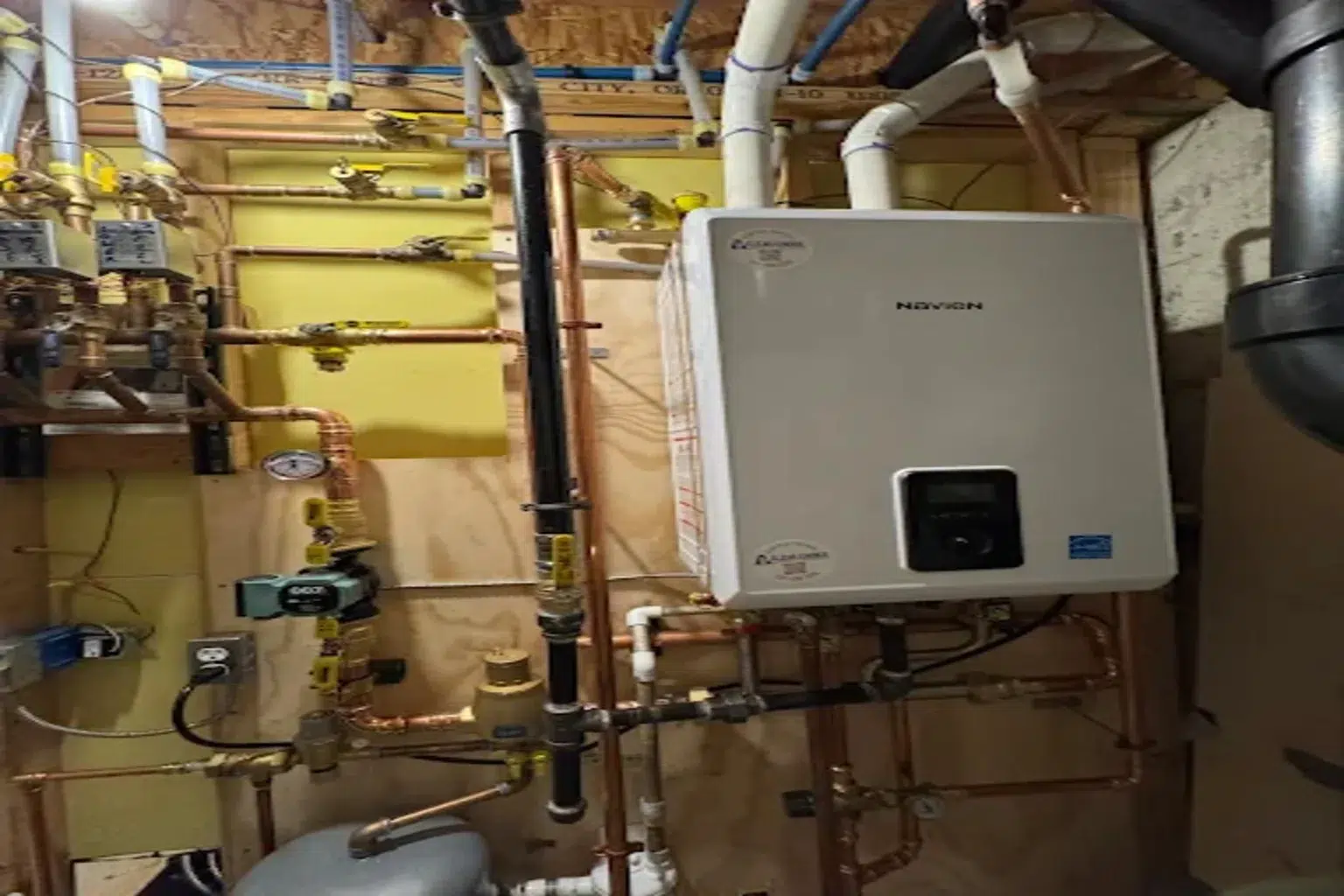
A tankless water heater is one of the smartest upgrades a Lakewood homeowner can make. Endless hot water on demand, lower energy bills, and a unit that takes up a fraction of the space of a traditional tank, the appeal is easy to understand. Whether you live in a ranch-style home near Green Mountain, a bungalow in the Eiber neighborhood, or a newer townhome around Belmar, the promise of going tankless is the same.
But here is the part most contractors skip over during the sales conversation: your home’s existing gas line may not be able to handle a tankless unit at all. Before you invest in a tankless water heater installation in Lakewood, it is critical to understand why the gas infrastructure already in your home plays a much bigger role than most people realize, and what it could cost you if it is overlooked.
Why Tankless Water Heaters Demand So Much More From Your Gas Line
A traditional 40- or 50-gallon storage tank water heater typically draws between 30,000 and 50,000 BTUs per hour from your gas supply. It heats water slowly over time and stores it until you need it. A whole-house tankless water heater, by contrast, has to heat water instantly as it flows through the unit. To do that, it pulls anywhere from 150,000 to 200,000 BTUs per hour during peak demand.
That is roughly three to four times more gas volume than your old tank heater ever needed. The gas line that has reliably served your home for the past 20 or 30 years was almost certainly sized for the equipment that was originally installed, not for a high-output tankless unit. In many Lakewood homes, particularly those built in the Applewood and Westgate areas during the 1960s and 1970s, the existing gas pipe diameter simply cannot deliver that volume of gas at the pressure required.
The Hidden Problem With Undersized Gas Lines in Lakewood Homes
When a tankless water heater is connected to an undersized gas line, several frustrating problems emerge almost immediately. The unit fires up but cannot maintain consistent water temperature, particularly when multiple fixtures are running at once. Hot water fluctuates, the burner shuts off under load, or the unit triggers an error code and locks out entirely.
Beyond performance issues, there are safety concerns. A gas line that is straining to supply adequate pressure to a high-demand appliance can create incomplete combustion, which produces carbon monoxide. It can also cause other gas appliances in the home, your furnace, gas range, or fireplace, to underperform because they are now competing for a gas supply that was never sized for all of them together.
This is not a theoretical risk. Plumbers in Lakewood CO regularly encounter homes where a tankless unit was installed by a contractor who never assessed the gas line, leaving the homeowner with a brand-new water heater that does not work correctly from day one.
How to Know If Your Gas Line Is Up to the Task
Determining whether your current gas line can support a tankless water heater installation in Lakewood requires a proper assessment, not a quick glance. A licensed plumber will evaluate several key factors before giving you a clear answer:
- Gas pipe diameter and material: Older Lakewood homes often have 1/2-inch black iron pipe running to the water heater location. Most whole-house tankless units require at least a 3/4-inch dedicated gas line, and some high-capacity units need a full 1-inch line.
- Length of the gas run: The longer the pipe run from the gas meter to the water heater location, the more pressure drop occurs along the way. A run that works fine for a tank heater may be completely inadequate for a tankless unit.
- Total BTU load on the meter: Your gas meter has a maximum rated capacity. If your home already runs a high-efficiency furnace, a gas range, a gas dryer, and a fireplace, adding a 200,000 BTU tankless unit may exceed the meter’s delivery capacity. In that case, a gas meter upgrade through Xcel Energy, the primary utility serving Lakewood, may be required.
- Gas pressure at the appliance location: A pressure test at the point of installation confirms whether the line can sustain adequate pressure during peak demand. This is a step that should never be skipped.
What a Gas Line Upgrade for Tankless Installation Actually Involves
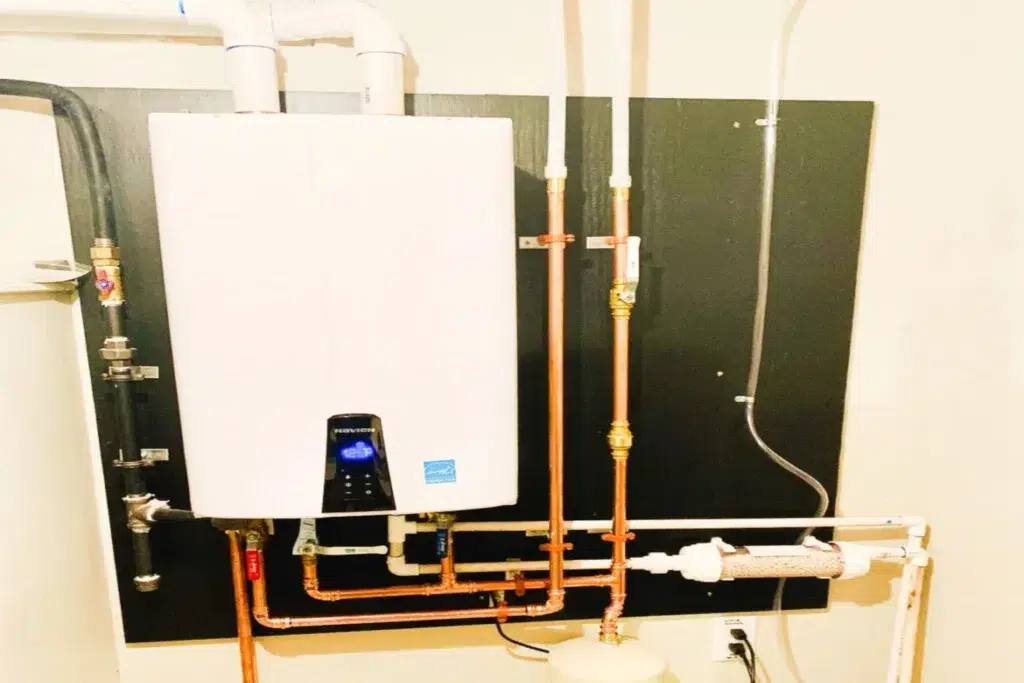
If a gas line upgrade is needed, the scope of work depends on how far the supply line runs and what is already in place. In many cases, the existing line can be extended or upsized from the meter to the water heater location without opening up walls. In other situations, particularly in older homes in the Eiber or Glennon Heights neighborhoods where the gas infrastructure runs through finished basements or tight utility spaces, more extensive work is required.
A typical gas line upgrade for a tankless installation includes running a new dedicated gas line from the meter or a main supply point, installing a correctly sized shut-off valve at the unit, and pressure-testing the completed line before the water heater is connected. All of this work must be permitted through the City of Lakewood and inspected before the system can be put into service.
Skipping the permit is a risk that catches up with homeowners. Unpermitted gas work can void your homeowner’s insurance coverage, create complications during a home sale, and leave you liable if an incident occurs. Working with licensed plumbers in Lakewood CO who pull proper permits is not optional, it is the only way to do this correctly.
Does a Gas Line Upgrade Mean the Switch to Tankless Is Not Worth It?
Not at all. For most Lakewood homeowners, the long-term savings on energy bills, the extended equipment lifespan of 20 or more years compared to a tank heater’s 10 to 12 years, and the improved daily comfort more than justify the upfront investment, even when a gas line upgrade is part of the package.
The key is going in with a complete and honest picture of what the project will cost. A contractor who quotes only the unit and basic installation without first assessing your gas infrastructure is setting you up for unexpected charges after the job has already started. A thorough pre-installation evaluation by a qualified professional gives you an accurate total project cost before any work begins.
Other Installation Factors Lakewood Homeowners Should Know
Beyond the gas line, a complete tankless installation assessment should also cover venting requirements. Unlike a traditional tank heater that may vent through an existing flue, most high-efficiency condensing tankless units require a direct vent system with PVC piping that exits through an exterior wall. Depending on where your water heater is located in your home, this may add to the scope of the installation.
Lakewood’s altitude at approximately 5,700 feet also affects combustion performance. Tankless units need to be properly adjusted for high-altitude operation to ensure efficient and complete combustion. A technician who is not familiar with Front Range installation conditions may not account for this, which reduces efficiency and can shorten the life of the unit.
Get the Full Picture Before You Commit, Talk to A Clear Choice Plumbing and Heating
Tankless water heater installation in Lakewood is an investment worth making, but only when it is done right, from the gas line out. At A Clear Choice Plumbing and Heating, every tankless installation starts with a thorough assessment of your home’s gas supply, meter capacity, venting options, and permit requirements. There are no surprises after the job starts and no corners cut to save time.
Serving Lakewood neighborhoods including Green Mountain, Belmar, Applewood, Eiber, and Glennon Heights, our team at A Clear Choice Plumbing and Heating brings over 10 years of experience with Denver metro gas and plumbing systems. As licensed plumbers in Lakewood CO, our team handles everything from the initial assessment and gas line upgrade through to final inspection and commissioning, so your new tankless unit works exactly as advertised from day one.