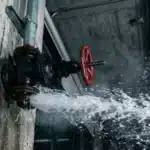
It is the middle of the night and you hear water where there should not be any: a hiss behind a wall, a steady drip through the ceiling, or water spreading across the basement floor. A burst pipe can release a lot of water quickly, and what you do in the first few minutes often matters more for the final damage than anything that happens afterward. Here is what to do, in order, before your plumber in Littleton arrives.
The First Few Minutes: Stop the Water and Stay Safe
Step 1: Shut off the water at the main
Stopping the water comes before everything else, including cleanup and phone calls. In most single-family homes, the main shutoff valve is in the basement or crawlspace on the wall facing the street, according to Denver Water. In some homes it is near the water heater or in a utility closet.
- A round handle (gate valve) turns clockwise until it stops.
- A lever handle (ball valve) turns a quarter turn, so the lever sits crosswise to the pipe.
If the valve will not move or does not stop the water, do not force it hard enough to break it. The City of Littleton notes that all city residents are served by Denver Water, and Denver Water’s emergency line is 303-628-6801.
Once the water is off, the situation stops getting worse. Everything after this is about safety and limiting damage.
Step 2: Make the area safe
Water and electricity are the real danger in a burst pipe, not the water itself.
- If water is near outlets, extension cords, the electrical panel or plugged-in appliances, stay out of the standing water.
- Only turn off power at the breaker panel if you can reach it while standing on a dry floor. If you are not sure, leave it alone and wait for help.
- If you smell gas, especially near a flooded water heater, furnace or boiler, leave the house right away without using light switches. Once you are outside, call Xcel Energy’s gas emergency line at 800-895-2999 or 911.
Next: Drain the Lines and Limit the Damage
Step 3: Drain the lines and protect the water heater
With the main off, there is still water sitting in the pipes. Open a faucet on the lowest level of the house to let it drain out there instead of through the break.
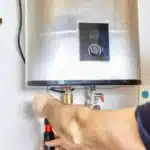
If the burst is on the hot water side, or a lot of water has drained from the system, set a gas water heater to its “vacation” or “pilot” setting, or switch off the breaker for an electric unit, following the instructions on the label. That keeps the heater from firing while it may be low on water.
Step 4: Limit the water damage
Now you can turn to the mess:
- Move furniture, electronics, rugs and boxes away from the wet area.
- Soak up standing water with towels, a wet vac or buckets.
- Open cabinet doors and closets near the leak so trapped water can dry.
- If water is collecting in a sagging ceiling, keep people out from under it.
Take photos and video of the damage before you clean up too much. Your insurance company will want to see it, and it is far easier to capture now.
Drying quickly matters. The EPA advises drying water-damaged areas and items within 24 to 48 hours to prevent mold growth, so start airflow with fans as soon as it is safe to do so.
Calling a Plumber in Littleton: What to Tell Them
When you call, a few details help us arrive prepared:
- Where the leak is: wall, ceiling, basement, crawlspace or outside
- Whether you were able to shut off the water
- What the pipe looks like if you can see it: copper, plastic or galvanized steel
- Whether it has been very cold and the pipe may have frozen
- Whether any water reached electrical equipment or gas appliances
Our emergency plumbing service is available around the clock. We prioritize urgent calls and often reach nearby homes within an hour.
One distinction is worth knowing. If what you are seeing is sewage backing up through a floor drain or toilet rather than clean water from a pipe, that is a different problem. The City of Littleton has a sewer emergency line, 303-794-1551 after hours, for problems in the city’s sewer. Problems in your own sewer line need a plumber.
Why Pipes Burst in Littleton Winters
Most winter bursts start with a freeze. Water expands as it freezes, and that can split a pipe. The leak often does not show until the ice thaws and water starts flowing again, which is why a burst pipe is often discovered the morning after a cold night.
The most vulnerable pipes are in exterior walls, crawlspaces, unheated basements and garages. Denver Water’s prevention tips are a good habit list for every cold snap:
- Open cabinet doors under sinks on exterior walls.
- Keep attached garage doors closed.
- Let the faucet farthest from where water enters the house drip slowly during deep freezes.
- Keep the thermostat above 65 degrees if you will be away for several days.
Not every burst is caused by cold. Corroded older pipes, high water pressure, and failed supply hoses on washing machines, toilets and sinks can all give out without warning.
Once the pipe is fixed, look at why it failed. If it froze, that spot will freeze again under the same conditions unless something changes: better insulation, sealing a cold air gap, or rerouting the pipe out of an exterior wall. If it failed because of age or corrosion, it is worth asking whether the rest of the piping is in similar condition. You can read more about our work as a plumber in Littleton.
Frequently Asked Questions
Should I turn off my water heater if a pipe bursts?
If the burst is on the hot side or a lot of water has drained from the system, yes. Set a gas unit to “vacation” or “pilot,” or turn off the breaker for an electric unit, following the label instructions.
Can I patch a burst pipe myself until the plumber arrives?
With the main shut off, there is usually little to gain from a temporary patch. Clamps and repair tape can slow a small pinhole leak, but a split pipe needs a proper repair. Focus on keeping the water off and drying the area.
Will Denver Water fix a broken pipe on my property?
Denver Water maintains the public water mains. The service line on your property and all the plumbing inside the house are the property owner’s responsibility.