The first cold week of the season is when a lot of Englewood homeowners find out which radiators are pulling their weight. One stays cold at the top, the back bedroom never gets warm, and the radiator closest to the boiler is almost too hot to touch. Many older homes here still heat with hot water boilers and cast iron radiators, and most cold radiator problems have a simple cause. Some you can fix with a radiator key and ten minutes. Others are signs that it is time for boiler repair in Englewood. Here is how to tell the difference.
Why Radiators Go Cold in a Hot Water System
A hot water heating system is a closed loop. The boiler heats the water, a circulator pump pushes it through the pipes and radiators, and it returns to the boiler to be heated again. A radiator goes cold when something stops hot water from reaching it or filling it.
The pattern of the cold spot is the best clue:
- Cold at the top, warm at the bottom: can point to air trapped in the radiator.
- Cold everywhere in one room or zone: can point to a valve, a zone valve or the circulator pump.
- Radiators far from the boiler cold, close ones hot: can point to a balancing problem.
- Every radiator lukewarm: can point to low system pressure or a boiler problem.
Note that this guide is for hot water systems. Steam systems work differently, so the steps below do not apply to them.
How to Bleed a Radiator Safely
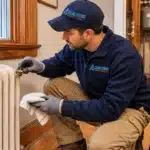
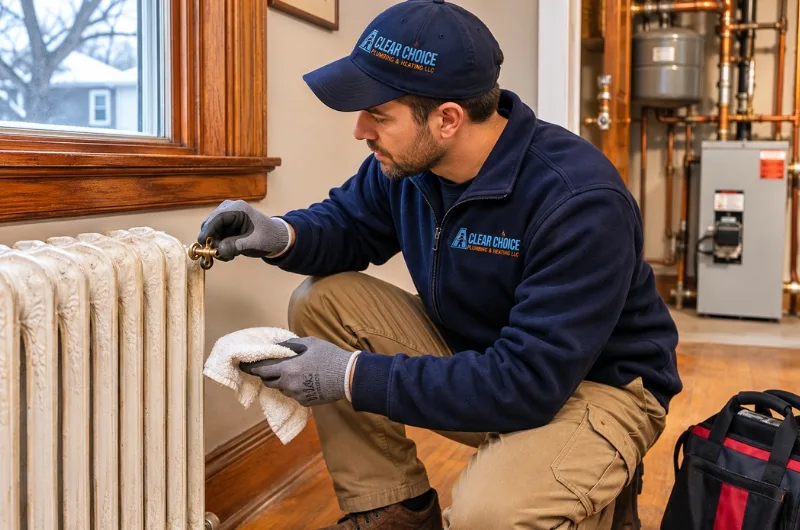
Bleeding lets trapped air out of a radiator so hot water can fill it. Radiators and boilers vary, so follow your manufacturer’s instructions where you have them. The general process looks like this, and you will need a radiator key or the right tool for your valve, a rag, and a small container.
- Turn the heat down and let the system cool. The water in the system is hot and under pressure, so start with the radiators cool to the touch.
- Find the bleed valve. Look for a small valve near the top of the radiator.
- Hold a rag and container under the valve and open it slowly, about a quarter turn.
- Let the air out. You will hear it hiss. When water starts to come out instead of air, close the valve.
- Repeat on the other cold radiators in the house.
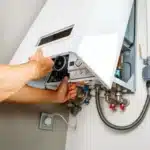
- Check the boiler pressure gauge. Compare the gauge with the range your boiler’s manufacturer recommends. If it is low, follow the manufacturer’s instructions for your specific boiler or have it adjusted.
If a radiator needs bleeding every few weeks, the air is coming from somewhere. That is a symptom worth having checked, not a chore to keep repeating.
Balancing: When Far Radiators Never Warm Up
In a well-balanced system, every radiator gets its share of hot water. When some rooms heat quickly and others barely warm up, the system may need balancing.
Some radiators have a second valve, sometimes called a lockshield valve, for adjusting how much water flows through. Balancing means adjusting the flow so the radiators that heat fastest leave more hot water for the ones that lag. It takes small changes, made one radiator at a time, with time between adjustments.
In older Englewood homes, it is common to find radiators that have been moved, swapped, or replumbed over the decades, or valves that have not been turned in years. A valve that will not move, or that starts leaking when you try, is a sign to stop and call a professional.
When Cold Radiators Mean You Need Boiler Repair in Englewood
Bleeding and balancing solve a lot of problems. These signs point to something they will not fix:
- The pressure keeps dropping. A system that needs refilling again and again has a leak somewhere, even if you cannot see water. It can also point to a failing pressure relief valve or expansion tank.
- Air keeps coming back. Repeated air in the radiators can mean a leak, a failing air separator or vent, or a problem with how the system takes in fresh water.
- A whole zone stays cold. A zone valve that is not opening, or a circulator pump that is weak or stuck, can leave one area cold no matter how many radiators you bleed.
- Banging, gurgling or rumbling. Noise in the pipes or the boiler often means air, sediment, or a pump problem.
- The boiler keeps shutting off or will not stay lit. That usually points to an ignition or safety control issue, and repeated resets are not a fix.
The U.S. Department of Energy recommends that maintenance on hot water heating systems be provided by a heating system professional. Its checklist includes inspecting the expansion (pressure) tank to confirm it is filled with air rather than water, and testing the pressure relief valve.
For more warning signs, see our post on 5 boiler repair warning signs Englewood homeowners ignore.
Safety note: If you smell gas near the boiler, leave the house right away and call Xcel Energy’s gas emergency line at 800-895-2999 or 911 once you are outside. If your carbon monoxide alarm sounds, get everyone outside and call 911. The CDC recommends having your heating system serviced by a qualified technician every year and keeping a battery-powered or battery backup CO detector in the home.
Why Older Englewood Systems Need a Careful Hand
Many hydronic systems in Englewood’s older homes have been running for decades. Parts for older boilers can be harder to find, and a repair that is simple on a newer system may take more diagnosis on an older one. That is why getting the cause right the first time matters. A cold radiator caused by a failing circulator pump will not be fixed by a new thermostat, and a leak will not be fixed by refilling the system every week.
When you call us, we inspect the system, explain what we found, and give you a clear, upfront price before any work begins. Learn more about our boiler repair and service.
Frequently Asked Questions
How often should I bleed my radiators?
Bleed them when a radiator is cold at the top or you hear gurgling. Many homeowners do it at the start of the heating season. If you are bleeding the same radiator every few weeks, have the system checked.
Why is my radiator cold at the top but hot at the bottom?
That pattern can point to trapped air, and bleeding the radiator is the first thing to try.
What if bleeding doesn’t fix a cold radiator?
Then the cause is likely somewhere else, such as a valve, the circulator pump, or system pressure. That is the point to have a professional look at the system.
My boiler pressure dropped after I bled the radiators. Is that normal?
Check the gauge against the manufacturer’s recommended range. If it keeps dropping afterward, there is likely a leak or a failing component.
Can I balance radiators myself?
You can, if the valves turn freely and you make small changes over time. If a valve is stuck or starts leaking, stop and call a professional.
Warm Every Room This Winter
If your radiators are still cold after bleeding, or the pressure keeps dropping, call A Clear Choice Plumbing & Heating at (720) 938-1554. We are a licensed and insured local team based in Englewood, providing boiler repair across Englewood and the Denver metro. You can also request a quote online.