A sewage smell in your yard can point to a plumbing problem even when every fixture inside your Littleton home appears to work normally. The main sewer service line runs underground, so cracks, separated joints, root intrusion, or other defects can develop without creating a visible indoor leak.
However, an outdoor sewage odor does not confirm a damaged sewer pipe. Other conditions can create similar smells, which makes identifying the source an important first step.
A professional sewer line repair company in Littleton can inspect the underground line, locate potential defects, and determine whether the odor connects to your home’s sewer system. Knowing which additional warning signs to watch for can also help you decide when the problem needs professional attention.
Why Can Your Yard Smell Like Sewage When Nothing Is Leaking Inside?
Your home’s plumbing system extends far beyond the pipes you can see beneath sinks or behind fixtures.
Wastewater from toilets, sinks, showers, and other fixtures flows into a larger sewer service line that carries it away from your property. Because much of this line remains underground, a developing problem can go unnoticed inside the house.
For homeowners dealing with plumbing in Littleton, an underground sewer problem can develop without leaving water beneath a sink, around a toilet, or near another indoor fixture.
Several conditions may produce a sewage-like odor outside, including:
- A damaged private sewer service line
- Separated or deteriorated pipe joints
- Tree root intrusion
- A loose or damaged sewer cleanout
- Plumbing vent problems
- A partially obstructed sewer lateral
- A nearby sewer or drainage issue
The location and frequency of the smell can provide useful clues. If the odor repeatedly develops near the suspected path of the sewer service line and appears alongside slow drains, gurgling fixtures, recurring blockages, or unusual yard conditions, the underground sewer system deserves closer attention.
Why Can Older Sewer Lines Develop Problems?
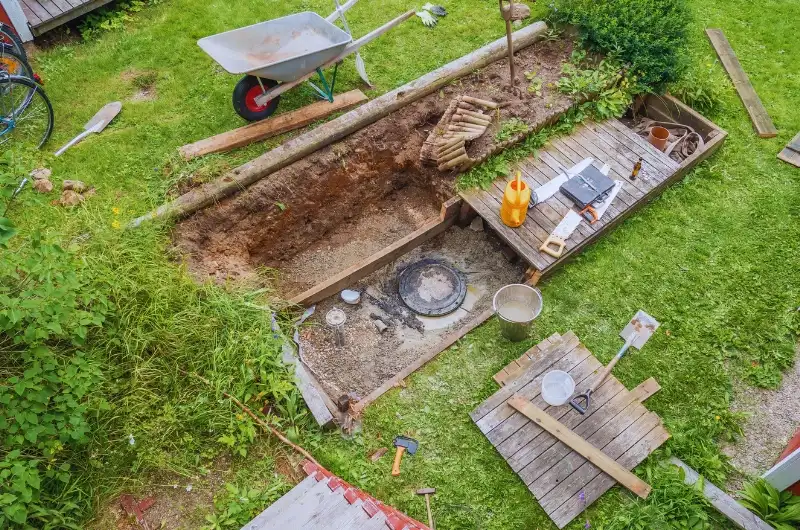
Age can become an important consideration for established Littleton properties.
The City of Littleton notes that homes built since the early 1980s are likely to have plastic sanitary sewer service lines. Older properties may have different pipe materials and installation methods depending on their construction date and whether previous owners repaired or replaced the original sewer line.
An older pipe does not necessarily need replacement. However, years of soil movement, aging connections, root activity, and normal deterioration can affect underground piping.
Soil Movement Can Stress Underground Pipes
Colorado’s expansive soils can change volume as moisture levels fluctuate. Repeated ground movement can place stress on buried infrastructure, especially rigid or aging pipe sections.
Over time, this movement may contribute to:
- Offset pipe connections
- Separated joints
- Cracks
- Low or sagging sections
- Changes in pipe alignment
Because underground conditions differ from one property to another, an inspection provides more useful information than assuming a particular problem based only on the home’s age.
Mature Tree Roots Can Enter Existing Openings
Mature trees contribute to the character of many established Littleton properties, but their roots naturally grow toward available moisture.
An intact sewer line should keep roots outside. Trouble can begin when a crack, deteriorated connection, or separated joint creates an opening.
Once roots enter the line, they can expand and collect paper, grease, waste, and other materials moving through the pipe. Over time, the obstruction can restrict wastewater flow and contribute to recurring sewer problems.
Root intrusion does not automatically require replacement of the entire sewer line. A camera inspection can reveal where the roots entered, how much of the pipe they affect, and whether structural damage exists.
What Signs Point to an Underground Sewer Line Problem?
An outdoor sewage odor becomes more significant when other plumbing symptoms develop at the same time.
Watch for these warning signs:
- Several drains become slow at the same time: One slow sink often points to a localized issue. Multiple fixtures draining slowly can indicate a restriction farther downstream.
- Toilets or drains make gurgling noises: Gurgling can occur when wastewater flow or air movement through the drainage system becomes disrupted.
- Sewer blockages repeatedly return: A blockage that comes back after clearing may indicate root intrusion, pipe damage, or another persistent condition.
- Wet or unusually soft areas develop in the yard: Persistent moisture near the sewer-line route deserves investigation, especially when the surrounding ground remains dry.
- The lawn changes above the sewer-line route: Unusual vegetation growth or changing soil conditions can justify a closer inspection when other sewer symptoms also occur.
- The property has a history of sewer backups: Previous backups can provide important context when new odors or drainage problems appear.
One symptom may have several possible explanations. Multiple symptoms occurring together provide a stronger reason to inspect the main sewer service line.
How Can a Sewer Camera Inspection Identify the Problem?
Digging up the yard should not be the first response to an unexplained sewage smell.
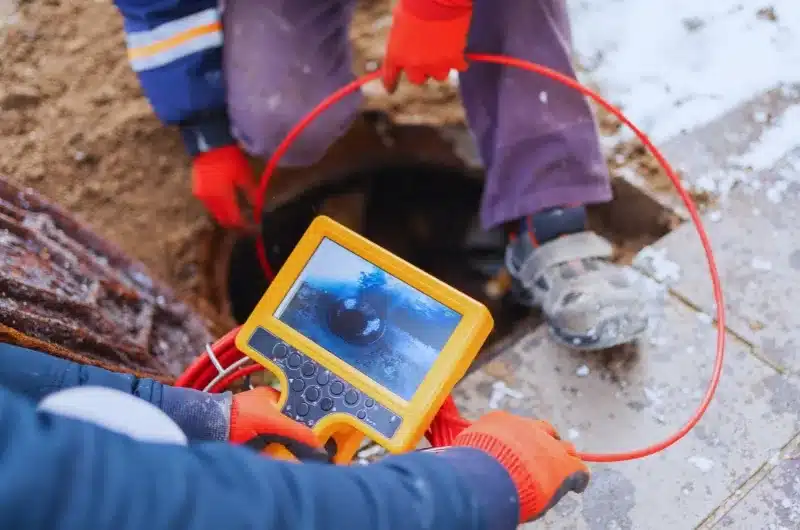
A sewer camera inspection provides a more targeted way to investigate the underground pipe before making repair decisions.
During an inspection, a professional plumbing inserts a specialized waterproof camera into an accessible part of the sewer line. The camera allows the technician to examine the interior condition of the pipe and look for problems such as:
- Root intrusion
- Cracked pipe sections
- Offset or separated joints
- Heavy buildup
- Pipe deterioration
- Sagging or bellied sections
- Obstructions
- Partial or complete collapse
The City of Littleton advises property owners who do not know the condition of their sanitary sewer service line to consider having a qualified company perform a video inspection.
This approach can prove particularly useful for older properties, homes with recurring sewer problems, and homeowners who want evidence of the pipe’s condition before considering a major repair.
A qualified sewer line repair company in Littleton can use the camera findings to determine whether the problem calls for clearing, localized repair, rehabilitation, or replacement.
The inspection also helps prevent unnecessary work. If the camera shows that the sewer line remains structurally sound, the homeowner can focus on the actual source of the odor instead of assuming the yard needs excavation.
Why Isn’t Clearing the Sewer Line Always Enough?
Mechanical sewer clearing can restore wastewater flow when roots, debris, or another obstruction restricts the line. However, clearing an obstruction and repairing the pipe solve two different problems.
For example, roots may enter through a separated joint. Removing the roots can reopen the passage, but the opening that allowed them into the pipe may remain.
Clearing also cannot correct structural conditions such as:
- A collapsed pipe
- A badly offset connection
- Significant deterioration
- A severely sagging section
- A broken pipe wall
When the same sewer problem repeatedly returns after clearing, a camera inspection can help determine whether an underlying structural defect contributes to the recurrence.
Does Sewer Line Repair Always Mean Digging Up the Entire Yard?
Not necessarily.
Traditional excavation remains necessary for certain sewer problems, but trenchless repair methods can reduce surface disruption when pipe and site conditions allow them.
One option is CIPP, or cured-in-place pipe lining. This process places a liner inside an existing pipe and cures it to create a new interior surface.
For an eligible sewer line, CIPP lining may address certain cracks, deteriorated sections, and joint problems without requiring extensive excavation.
However, trenchless lining cannot correct every type of damage. A severely collapsed, badly deformed, or significantly bellied sewer line may require a different repair method. Pipe diameter, access, location, structural condition, and other site-specific factors also influence whether lining makes sense.
Camera inspection results allow the plumbing professional to evaluate these conditions before recommending a repair method.
Who Is Responsible for a Sewer Line Problem?
Determining ownership becomes especially important when the suspected problem sits outside the house.
The City of Littleton explains that the private sanitary sewer service line belongs to and remains the responsibility of the property owner. Depending on the service-line configuration, that responsibility may extend beyond the yard and into a street or public right-of-way.
Before arranging major repair work, homeowners should determine:
- Where the problem sits
- Whether the private sewer service line has a defect
- What type of defect exists
- Whether the repair requires excavation
- Whether work will enter a public right-of-way
- Which permits or inspections apply
Sewer service-line repair or replacement can require local permits, and requirements may vary according to the sanitation district and project location.
A professional familiar with Littleton sewer requirements can help homeowners understand what the inspection reveals and what steps the repair may require.
When Should You Call a Sewer Line Repair Company?
A brief outdoor odor may have several possible causes. A sewage smell that repeatedly returns deserves more attention, especially when it appears alongside changes in how the home’s drainage system performs.
Consider scheduling a professional evaluation when:
- The sewage odor repeatedly returns to the same area of the property.
- Multiple drains begin slowing down.
- Toilets or drains frequently gurgle.
- Sewer blockages continue to return.
- Unexplained wet or soft areas develop outside.
- The home has an older sewer service line with an unknown condition.
- The property recently experienced a sewage backup.
- Previous sewer clearing has not prevented recurring problems.
Early investigation can provide useful information before the problem becomes more disruptive.
Most importantly, scheduling an inspection does not mean you have committed to replacing the sewer line. The goal is to identify what is happening underground, determine the location and severity of any defect, and choose a repair approach based on evidence.
Frequently Asked Questions
Can a sewer line leak underground without causing an indoor plumbing leak?
Yes. Because the main sewer service line runs underground outside the living space, certain defects can develop without creating visible water inside the house. Outdoor odors, drainage changes, recurring blockages, or unusual yard conditions may provide the first reason to investigate.
Can tree roots enter an underground sewer line?
Yes. Roots can enter through existing cracks, deteriorated connections, or separated joints while seeking moisture. Once inside, they can restrict wastewater flow and contribute to recurring blockages.
What can a sewer camera inspection find?
A sewer camera can identify conditions such as root intrusion, obstructions, cracked pipe sections, separated or offset joints, deterioration, sagging areas, and certain forms of structural damage. These findings help determine whether the line needs clearing, repair, rehabilitation, or replacement.
Can a damaged sewer line be repaired without destroying the yard?
Sometimes. Trenchless methods such as CIPP lining can reduce excavation when the existing pipe meets the requirements for that repair method. Severely collapsed, deformed, or badly sagging lines may require excavation or another approach.
Should I inspect the sewer line when buying an older Littleton home?
A sewer camera inspection can provide useful information when purchasing a home with an older or unknown sewer service-line condition. Because much of the system sits underground, a standard visual home inspection may not reveal problems inside the sewer line.
Don’t Ignore a Sewage Odor That Keeps Coming Back
A recurring sewage smell in the yard deserves investigation, especially when slow drains, gurgling fixtures, recurring blockages, previous backups, or unusual yard conditions appear with it.
A sewer camera inspection can show what is actually happening inside the underground line and help distinguish an obstruction from a structural defect. That information allows homeowners to consider repair options based on the pipe’s actual condition instead of guesswork.
If you suspect a problem with your sewer service line, contact A Clear Choice Plumbing and Heating at +1 7209381554. The team can inspect the system, explain the camera findings, and discuss appropriate repair options based on the condition of your sewer line.