Here is a simple plumbing observation that can tell you more than you might expect. You have to compare the first glass of water you draw in the morning with another glass after the faucet has run briefly.
For some Littleton homeowners, the first one carries a faint metallic smell or unusual taste while the second seems completely normal.
Why would a few seconds make such a difference?
The answer may involve what happens while water remains stationary inside your home’s plumbing. It does not prove that the pipes need replacement, but repeated first-draw changes can provide useful evidence. Knowing when to consider a repiping service in Littleton starts with identifying the pattern before assuming where the problem originates.
Start With the First Draw, Not the Age of the House
It is easy to hear “metallic water” and immediately think of “old pipes.”
That conclusion moves too quickly.
Water quality changes can originate from fixtures, plumbing components, hot-water equipment, service-line materials, household supply piping, or other sources. The more useful starting point is determining exactly when and where the symptom occurs.
Water that sits inside household plumbing overnight spends hours in contact with the materials along its path. If those materials have begun deteriorating or corroding, first-draw water may show characteristics that become less noticeable after flushing.
That makes timing an important clue.
If the water smells or tastes unusual every time you use it, the investigation may move in one direction. If the symptom appears primarily after six or eight hours without use and fades after the faucet runs, plumbing contact time becomes more relevant.
Does the Metallic Taste Affect One Faucet or Several?
Before thinking about whole-home repiping, compare fixtures.
Start with the kitchen faucet after the water has remained unused for several hours. Observe the first cold-water draw. Then let the water run briefly and compare it again.
Next, repeat the observation at another fixture.
The results can help create a basic map of the problem.
What If Only One Faucet Tastes Metallic?
A localized symptom may shift attention toward the fixture, aerator, nearby piping, or another component serving that particular location.
What If Several Cold-Water Faucets Have the Same Metallic Taste?
When the same pattern appears at multiple locations, the broader cold-water supply system deserves more attention.
What If Only the Hot Water Tastes Metallic?
Now the investigation changes again. The water heater and hot-water distribution system become more relevant than immediately assuming that the entire house needs new supply piping.
These comparisons do not identify a particular metal or provide a laboratory water analysis. They simply give a plumber better evidence to work with.
What Other Plumbing Symptoms Make Metallic-Tasting Water More Concerning?
A metallic characteristic becomes more meaningful when other plumbing changes appear at the same time.
Suppose you have also noticed that a bathroom faucet no longer flows as strongly as it once did. Perhaps rusty-looking water occasionally appears when a fixture first opens. Maybe two different sections of plumbing have required repairs during the past year.
Individually, those symptoms can have multiple explanations.
Together, they create a pattern worth investigating.
Does Discolored Water Along With a Metallic Taste Point to Pipe Problems?
Yellow, orange, reddish, or brown water can sometimes accompany corrosion in certain metal plumbing systems. Aging galvanized steel, for example, can develop corrosion and internal mineral accumulation.
However, household piping is not the only possible source of discoloration. Utility activity, sediment, water-heater conditions, and other factors can produce similar changes.
Persistent discoloration therefore deserves investigation rather than an automatic diagnosis.
Can Reduced Water Flow Point to Internal Pipe Deterioration?
Homeowners naturally notice visible leaks. Internal pipe deterioration can be much quieter.
Corrosion and mineral accumulation inside older piping can gradually reduce the usable internal diameter. As that restriction develops, water flow at fixtures may decline.
The change can happen slowly enough that it becomes the home’s new “normal.”
This is why comparing multiple fixtures matters. One weak faucet can indicate a localized problem. A gradual decline across several fixtures may justify a broader evaluation of the supply piping.
If reduced flow appears alongside metallic characteristics, discoloration, or repeated pipe repairs, those combined symptoms provide more useful information than any one symptom alone.
Homes May Contain More Than One Generation of Plumbing
A home’s construction date does not necessarily tell you what plumbing exists behind every wall.
Previous owners may have remodeled kitchens, replaced a failed section of pipe, added bathrooms, finished basements, or completed partial plumbing upgrades. One Littleton property can therefore contain original piping alongside much newer materials.
That matters when evaluating metallic water.
Galvanized steel can experience internal corrosion as it ages. Copper can develop corrosion or localized pinhole leakage under certain conditions. Fixtures, fittings, valves, service-line components, and other materials can also influence what happens between the municipal supply and your glass.
Metals such as lead and copper can enter drinking water through corrosion of customer-owned service lines and household plumbing after treated water reaches a property. That is one reason plumbing materials and corrosion control remain important considerations when investigating tap-water concerns.
The visible pipe beneath your sink does not necessarily represent the condition or material of every supply line in the house.
A Leak Should Not Be Your First Test of Pipe Health
There is a common assumption worth challenging:
If the pipes aren’t leaking, they aren’t failing.
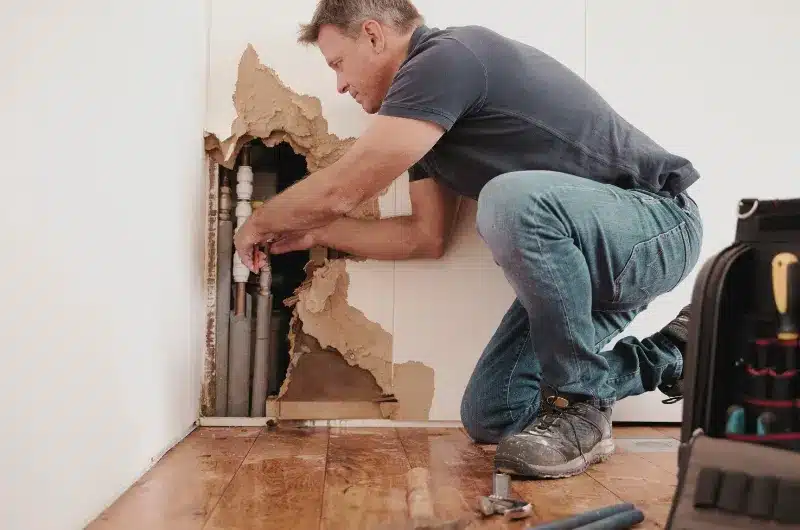
Supply-pipe deterioration does not always announce itself with water pouring through a ceiling.
Changes can develop internally first.
A homeowner may notice restricted flow, first-draw discoloration, unusual water characteristics, or recurring small plumbing repairs before a major leak occurs.
Waiting for visible water damage can remove the opportunity to investigate and plan on your own schedule.
Persistent symptoms deserve attention precisely because they can provide an earlier warning.
When Does Repiping Service Enter the Conversation?
Repiping makes the most sense when the evidence points toward widespread deterioration rather than one isolated plumbing problem.
A professional repiping service in Littleton may become appropriate when inspections reveal recurring leaks across different areas, significant internal corrosion, widespread flow restrictions, deteriorated supply materials, or multiple symptoms indicating that spot repairs no longer provide good long-term value.
Whole-home repiping replaces deteriorating supply lines with modern materials such as PEX or copper.
But whole-home replacement is not the only possible outcome.
Some houses have already undergone partial updates. Others may have a problem confined to a specific branch or section. That is why the scope should follow the actual condition of the plumbing rather than a predetermined recommendation.
What Would a Useful Plumbing Evaluation Actually Determine?
The purpose of an inspection is not simply to answer, “Are these pipes old?”
A more useful evaluation asks:
- Which fixtures show the symptom?
- Does it affect hot water, cold water, or both?
- What pipe materials are present?
- Are visible sections showing corrosion?
- Has water pressure or flow changed?
- Have leaks occurred in multiple locations?
- Has previous repiping already been completed?
- Does the evidence suggest a localized or system-wide problem?
Those answers can separate a fixture-level concern from deteriorating supply piping.
They can also help determine whether water testing would add useful information. Plumbing inspection and water testing answer different questions: one evaluates the physical plumbing system, while the other can identify substances present in the water.
Frequently asked questions
The metallic taste disappears after running the faucet. Does that matter?
Yes, the timing can provide useful diagnostic information. A symptom that becomes strongest after water remains stationary for several hours may justify investigating its contact with household plumbing materials.
Does brown water prove that my pipes are corroded?
No. Certain corroding pipes can contribute to reddish, orange, yellow, or brown discoloration, but sediment, utility activity, water-heater conditions, and other factors can also affect water appearance.
Will new pipes automatically improve my water quality?
Only when the existing household piping contributes to the problem. Repiping cannot correct every possible water-quality issue, which is why identifying the source comes first.
Should homeowners choose PEX or copper?
Both materials can work for residential repiping. Home layout, access, existing plumbing, local requirements, project scope, budget, and homeowner priorities can influence the appropriate choice.
Should water testing happen before repiping?
It may be useful when you have concerns about specific metals or contaminants. Water testing identifies what is present in a sample, while a plumbing inspection evaluates pipe materials, deterioration, leaks, flow, and the condition of the supply system. In some situations, using both approaches provides the clearest picture.
The Best Time to Investigate Is While You Still Have Options
One metallic-tasting glass of water does not justify tearing open walls.
A repeatable pattern is different.
When first-draw water repeatedly smells or tastes metallic and you also notice discoloration, declining flow, recurring leaks, or aging metal plumbing, the combined evidence deserves closer attention.
Early evaluation gives you options.
The cause may turn out to be one fixture, the water heater, a limited pipe section, or another correctable issue. If deterioration extends through the supply system, you can consider repair and repiping choices before a concealed failure turns the decision into an urgent one.
A Clear Choice Plumbing and Heating can evaluate supply piping in Littleton homes and determine whether the symptoms appear localized or point toward a broader plumbing concern.
Call +1 7209381554 to schedule an evaluation and learn what the condition of your home’s supply system actually indicates.