The average water heater in an Englewood home lasts eight to twelve years. Denver’s hard water shortens that window, especially if the tank has never been flushed. Most homeowners find out their heater is failing the same way cold shower on a Tuesday morning, or a puddle spreading across the utility room floor.
This guide covers what actually signals the end of a water heater’s life, what a real replacement looks like in the Denver area, and how to decide between a standard tank and a tankless unit. Written for Englewood and Denver Metro homeowners, not for a national audience.
Six Signs Your Water Heater Is at the End
Not every water heater problem means replacement. But when you see two or more of these at the same time, the math almost always favors replacement over another repair:
- The tank is more than ten years old. Check the serial number sticker on the side. The first two or four digits typically encode the manufacture date.
- Rusty or discolored hot water. Cold water runs clear, hot water runs orange or brown. That’s the tank corroding from the inside.
- Popping or rumbling from the tank. Sediment has hardened at the bottom. The burner is heating through a crust of mineral rock. Efficiency drops and the tank stresses.
- Water pooling near the base. A slow leak from the tank itself is not repairable. A leak from a fitting or valve is.
- Rising utility bills with no other explanation. Sediment buildup and a failing element or burner drive gas or electric use up long before the tank actually fails.
- Not enough hot water anymore. If a shower that used to be fine now runs cold in five minutes, the dip tube or heating element is failing.
Any single one of these on a tank under eight years old is usually a repair call. Two or more, or any of them on a tank over ten, and we recommend planning the replacement before the tank picks the timing for you.
Why Denver’s Water Is Harder on Water Heaters Than Most
Denver Water and most surrounding utilities deliver moderately hard water typically five to eight grains per gallon in the suburbs. That mineral load precipitates out as sediment inside the tank every time the water heats. Over eight to twelve years, that sediment can build up to several inches at the bottom of the tank.
The practical effect: the burner or lower element ends up heating through that layer of rock. Efficiency drops, the tank works harder, and the bottom of the tank overheats and weakens. A tank that might have lasted fifteen years in Seattle often gives out at ten in Englewood.
Two things extend life meaningfully in this water:
- Annual flushing. Draining a few gallons from the drain valve once a year clears the loose sediment before it hardens.
- Anode rod replacement every two to three years. The anode rod is a sacrificial metal rod that corrodes so the tank doesn’t. Once it’s gone, the tank is next.
Most homeowners have never done either. It’s the single biggest reason we replace tanks earlier than the manufacturer’s rated life.
Tank vs. Tankless: The Honest Comparison for Englewood Homes
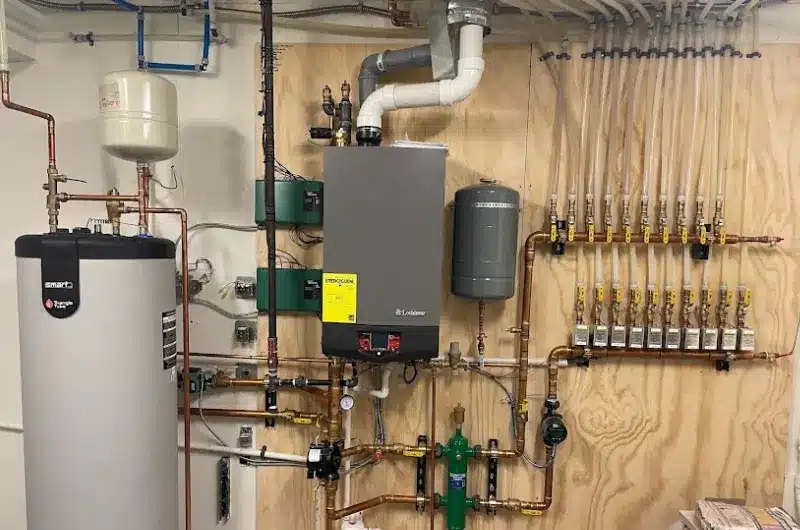
We install both. We also service boilers and hydronic systems. The right choice depends on the house, the family, and the fuel type not on which one has better marketing..
Standard tank water heaters are still the right call for most single-family homes in Englewood. Forty and fifty-gallon gas or electric tanks handle a family of four without complaint, install in a few hours, and cost meaningfully less up front than a tankless. Expected life in Denver water with basic maintenance is eight to twelve years.
Tankless water heaters heat water on demand instead of storing it. No standby heat loss, endless hot water for long showers or large families, and a wall-mounted footprint that frees up floor space in the utility room. The trade-offs are real: higher installation cost, gas models need proper venting and combustion air (especially important at Denver’s altitude), and hard water is even harder on the heat exchanger than on a tank, so annual descaling is not optional.
A tankless makes the most sense in three situations: a family that regularly runs out of hot water, a homeowner planning to stay in the house long enough to recoup the higher install cost, or a home where space in the utility area is a real constraint.
A standard tank makes the most sense for most other homes.
We give homeowners a straight recommendation based on your fixtures, your family size, and your fuel, not on which one has a higher install ticket.
What a Water Heater Replacement Actually Involves
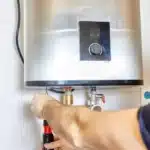
A straightforward tank-for-tank replacement is usually a same-day job:
- Site visit and sizing. We confirm the correct capacity for your household, check gas line size or electrical service, and inspect the shutoff, expansion tank, and venting.
- Permit. Water heater replacements in Englewood and most surrounding jurisdictions require a permit. We pull it.
- Drain and remove the old tank. Old unit is hauled off the same day.
- Install the new unit. New tank, new flex connectors, new shutoff if the existing one is corroded, new expansion tank if code requires. Gas connection is pressure-tested. Electric connection is verified.
- Final inspection and walkthrough. We show you the shutoff, the drain valve, the anode rod location, and how to flush the tank annually.
A tankless install is a longer job usually a day because it typically involves upsizing the gas line, adding a dedicated vent, and mounting the unit properly. The math on venting and combustion air matters more at Denver’s 5,280-foot altitude than at sea level, which is why we sometimes see problems with tankless units installed by out-of-area contractors.
What It Costs (Real Ranges, Not Estimates)
We won’t quote a price without seeing the job, but here are the honest ranges for the Denver Metro area:
- Standard 40 or 50 gallon gas tank, replacement: typically $1,800 to $2,800+ installed, including permit and haul-away.
- Standard 50 gallon electric tank, replacement: typically $1,500 to $2,300+ installed.
- Tankless gas unit, replacement of an existing tankless: typically $3,500 to $5,500+ installed.
- First-time tankless conversion (from tank to tankless): typically $5,500 to $8,500+ installed, depending on gas line and venting work required.
If a contractor quotes you significantly below these ranges, ask what they’re leaving out. If they quote significantly above, ask what they’re adding.
Frequently Asked Questions
How long does a water heater replacement take?
Most standard tank replacements are done in three to four hours. Tankless installs and tankless conversions typically take a full day.
Do I need a permit to replace a water heater in Englewood?
Yes. Englewood and every surrounding jurisdiction require a permit for water heater replacement. Any contractor who tells you otherwise is planning to skip inspection, which puts you at risk on resale and insurance claims.
Can I replace a water heater myself?
It’s legal in Colorado for a homeowner to work on their own primary residence, but we don’t recommend it. Gas connections, venting, and pressure relief valves are safety-critical. A failed install can void your homeowner’s insurance if it causes a fire or flood.
How often should I flush my water heater in Denver?
Once a year, minimum. Twice a year in homes with visibly hard water or where the anode rod hasn’t been replaced recently.
Is a tankless worth it for a family of two?
Usually not. The payback period on the higher install cost stretches out significantly for lower-usage households. A standard 40-gallon tank almost always makes more sense.
Get a Straight Answer on Your Water Heater
If your water heater is over eight years old, if you’ve noticed any of the six signs above, or if you’re just trying to decide between tank and tankless before you have to make the call under pressure, we’ll come out, look at what you have, and give you a straight recommendation.
Call A Clear Choice Plumbing & Heating at (720) 938-1554, or request service through our contact form. Serving Englewood, Denver, Littleton, Lakewood, Aurora, and the surrounding Denver Metro.